
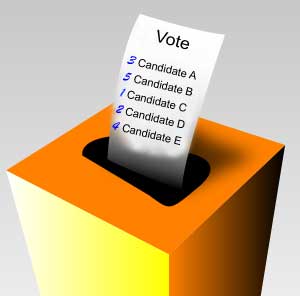
A fair electoral system is one of the cornerstones of democracy. Accurate representation of the electorate is necessary to the integrity of any democratic system. Our electoral system, however, is far from fair and accurate. When it comes to electoral reform, there are two major issue: the electoral system, and the electoral rules. The former concerns the system by which a candidate is elected: whether the candidate requires a majority or a simple plurality, whether there is a runoff, whether there is one representative per district, whether the system is proportional or not, etc. The electoral rules concern 1. the rules by which elections are conducted: whether there is early voting, whether state-issued photo IDs are required, whether the election is on paper ballots or digital ballot etc.; 2. the rules of nomination, rules governing political parties, and other such requirements.
Here in the United States, we have a multitude of electoral systems and electoral rules across the country. In the south, for example, many congressional districts employ a runoff system, o in which the top two candidates, if neither of them gets 50% of the vote in the first round, face off in a second, runoff election. In California, on the other hand, there is a nonpartisan primary election for all elected offices except for POTUS, VPOTUS, and political party committees. In many cities across California, in cities like Oakland and Berkeley (thanks mostly to Californians for Electoral Reform, or CfER) an instant runoff or alternative vote (AV) system has been implemented. In this system, voters rank their candidates in order of preference, and if their top choice has the least amount of votes and is eliminated from the competition, their votes goes to their second choice, and the same process is repeated until a candidate get 50% of the vote.
On the subject of electoral reform, we believe that it must be addressed state-by-state, not just because it is a large-scale reform, but also because constitutionally, the determination of electoral procedures is a power invested in the states. But why change a system that has been in place for so long?
The current system in most U.S. states and districts in called a first past the post plurality system. What that means is that if there are 3 candidates in a race, and candidate A gets 40% of the vote while candidates B and C get 30% of the vote, candidate A gets elected. It seems straight forward, but it is in fact problematic. What if candidate C was Green Party candidate and Candidate B was a Democrat, while candidate A was a Republican? in that case, none of the voters who voted for B and C wanted candidate A in office, and in fact, 60% of the electorate voted against candidate A’s platform, and still, A got elected. If this was an AV system, then the Democrat would have been elected, because B would have been the second choice for the C voters. In that way, AV provides more accurate representation for the voters than first past the post. But AV is not proportional, and in many cases, especially in a two-party system, almost half the votes go to waste.
In the aforementioned example, in an AV system, the votes cast for candidate C go to candidate B and candidate B wins. All the votes cast for candidate A, however, are thrown away, and 40% of the population in that district remain unrepresented in the legislature. But what if the district was bigger, and there were more than one seat available? In a district 4 times as big (by size we are referring to population, not physical size) as the one in our example, 4 candidates can win. A system similar to AV but with more than one seat available, is called single transferable vote, or STV. in STV, as in AV, voters rank their choices in order of preference, and the votes transfer from their first choice to their second choice if their first choice has the least amount of votes. But, if there are 10 candidates running, and there can be 4 winners, the four candidates with the most votes win. Why is that better than AV? Because now, if the new candidate A wins 20% of the vote, candidate B wins 30% of the vote, candidates C and D each win 25% of the vote (because all the votes cast for the other 6 candidates have been transferred to these four), no votes go to waste, and almost 100% of the voters are represented.
While our ideal preference is for the states to adopt the STV system, it is naive to think that such major reform would happen outright. Instead we plan to change the systems state by state, by ballot measures if necessary, to adopt AV, and later STV. In the following months this will be our main focus.
 Logikos Advocacy Group